
Storm and Roof Leak Water Damage in Austell, GA
A stain after a thunderstorm, wet insulation overhead, water at a door threshold or a creek in the yard: storm water gets into Austell, Mableton and Clarkdale houses from above and from the ground. Call (678) 737-4866 and describe the storm, where the water showed up and what it has touched.
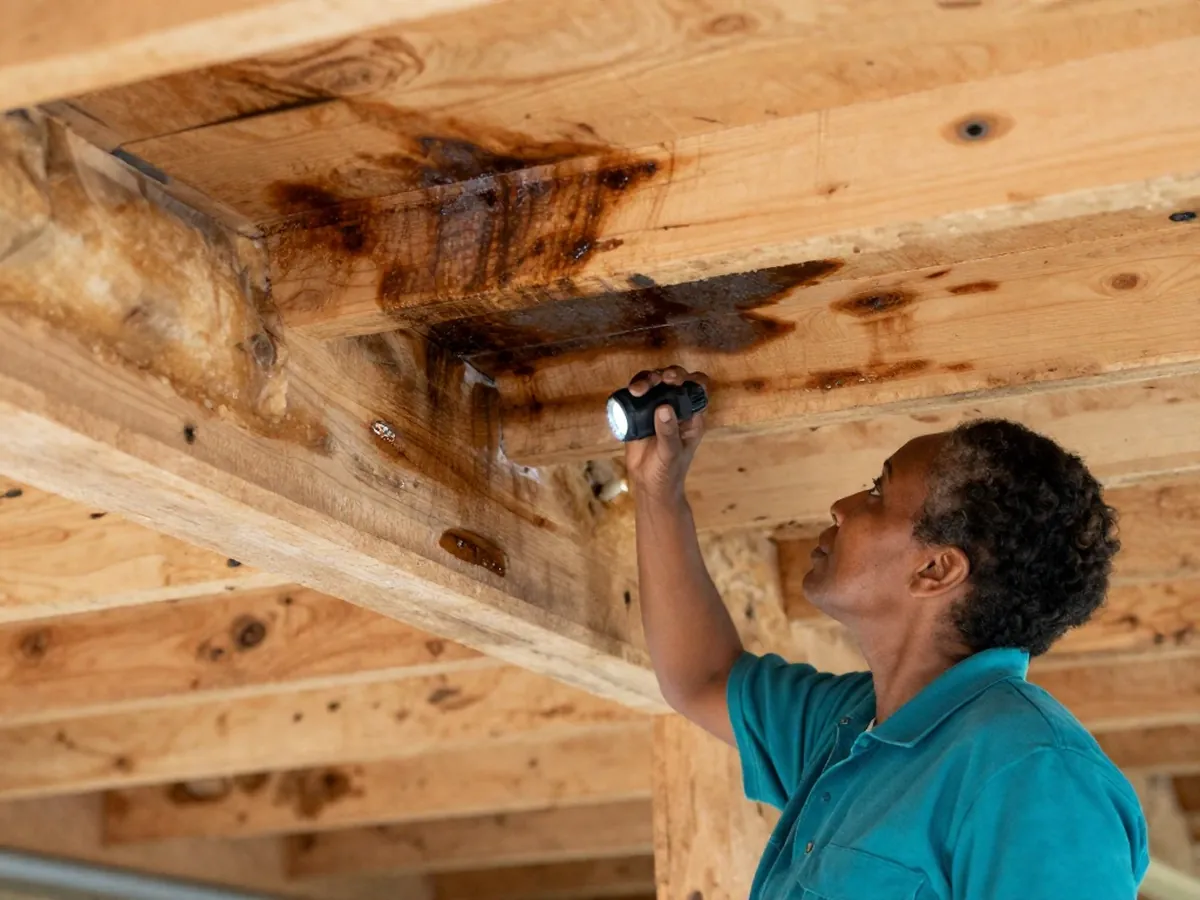
Roof leaks, wind and creek water after a storm
- A ceiling stain that appears after heavy rain
- Dark, damp insulation or roof boards seen from the attic hatch
- Water at a door threshold or window well
- Missing or lifted shingles, or limbs on the roof
- Drips from a light fixture or vent during wind-driven rain
Moves that backfire
Four storm-day habits that raise the damage
- 01
Climbing up to look. The leak can be photographed from the ground and the attic hatch, and wet shingles and ladder rungs are slick.
- 02
Moving a limb that touches a wire. Georgia Power says never to remove branches or objects touching a line.
- 03
Skipping the pictures. Georgia's insurance commissioner suggests photos or video before temporary repairs, plus every receipt.
- 04
Saying yes to the first truck at the door. The attorney general's storm page advises avoiding door-to-door repair offers and asking neighbors for referrals.
Where it tends to start
- Wind-lifted shingles or flashing letting rain under the roof surface
- A limb or tree opening a hole in the roof
- Gutters overflowing and soaking the fascia and wall
- Creek or ditch water coming in at a low door or window well
- Wind-driven rain forced past a vent, chimney or skylight
Back away and get help if
- A wire down or hanging low: treat it as live and keep well back. From a safe distance, the numbers are 911 and, for Georgia Power, 1-888-891-0938.
- Water at outlets, cords or the panel, or dripping from a light fixture: do not step in, do not touch, and phone 911 or the electric company once clear.
- Ceiling sagging or bulging under a roof leak: stand nowhere beneath it, and use 911 if it starts to come down.
- A gas smell, or floodwater around a gas appliance: leave and call the gas utility or 911 from outside.
How a job tends to run
From the last thunder to a dry ceiling
- During the storm
Wires, electricity and gas come first; Austell's flood page says to turn around rather than drive or walk through floodwater.
- After it passes
Photograph the outside, the attic from the hatch, and each stain before cleanup.
- Making safe
A roofer or contractor tarps or patches the opening; receipts are kept.
- Drying
Wet insulation and drywall are dealt with and fans and dehumidifiers run; the EPA says drying after flooding usually takes several days to weeks.
- Repairs
Roof, ceiling and finishes follow once readings are down.
Questions for the contractor
Five questions after a storm gets in
- Is the opening covered, and who covers it?
- Which ceilings and which insulation are wet, and how will that be shown?
- What does the contractor need photographed before work begins?
- How is the roof repair handled apart from the drying?
- What is in writing before work starts, and when are payments due?
Looks from dry ground
These are looks and sniffs from dry ground. Anything calling for a ladder, a tool or a step onto a wet floor belongs to the contractor.
- Walk the outside from the ground and note missing shingles, sagging gutters or limbs on the roof. Do not climb.
- Climb only to the hatch rim and sweep a flashlight over the roof boards and insulation; photograph dark patches or drips.
- Look at ceilings in upstairs rooms for new stains, and note which room sits under which part of the roof.
- Photograph everything, outside and in, before cleanup. Georgia's insurance commissioner puts photos or video ahead of temporary repairs.
What changes the size of the job
What changes the size of a storm job
- How many rooms.
- One stained ceiling and several rooms with wet insulation are different jobs.
- What is wet above.
- Insulation holds water and can drip for a long time.
- Rain or creek water.
- The CDC flags floodwater as possibly holding sewage, which changes what can be dried and what comes out.
- How large the opening is.
- A small gap and a limb through the roof call for different temporary covers.
Local lines to know
- The Weather Service's Helene narrative gives radar rainfall estimates of 8 to 10 inches across Cobb County and 7 to 8 across Douglas in 2024. Two gauges in the Sweetwater Creek basin in Douglas reached moderate flood stage, and one set a record crest.
- In September 2009 the Weather Service logged crests of 30.80 feet on Sweet Water Creek and 27.40 on Olley Creek at Austell, and 19.85 on Nickajack Creek at Mableton, each above its flood stage.
- After a storm, Georgia's attorney general tells homeowners to get a written contract, never pay the whole price before work starts, and avoid door-to-door repair offers.
Straight answers
How urgent is storm water indoors? Rate it 1 to 10.
Eight to ten if a wire is down, water reaches outlets or fixtures, a ceiling sags, or floodwater is by a gas appliance: move away and let 911 or the utility take it from there. Five to seven for a wet ceiling or insulation after rain. One to three for a small stain that has dried.
Who handles a downed power line?
Georgia Power tells people to treat any fallen line as electrified and deadly, and to report it to 911 or 1-888-891-0938 so it can be barricaded. It also says nobody is to move a limb that rests on a line.
Is the roof part of this job?
The wet insulation, ceilings and floors below a roof leak are water damage work. The roof repair is a roofer's job, and Georgia's attorney general suggests a written contract and never paying for the entire project before work begins.
Does flood insurance matter once a creek comes up?
FloodSmart says most homeowners policies leave out flood damage. Austell's flood insurance page says the city has been in the National Flood Insurance Program since April 5, 1974, and gives the program's number, 1-800-427-4661.
Is a storm leak in Mableton or Clarkdale covered?
Yes, both have pages: Mableton's page and Clarkdale's page. Call (678) 737-4866 and describe the storm and the wet rooms.
Keep the street address, the wet room and a few phone photos close by. Then call (678) 737-4866 and describe where the water came from and what it touched. Tenants, tell the owner or manager as well.
Call (678) 737-4866A word on paperwork
After a storm, who checks the paperwork
Georgia's attorney general posts tips for hiring after storms. The paperwork page covers what it says about contracts, payments and checking who is doing the work.