
Reads
First questions after water gets in: answers for Austell, Mableton and Clarkdale
The water may have stopped or may still be coming, and the questions pile up: is it safe to go in, what gets switched off, what goes in the trash, how long before mold. CDC and EPA pages supply the answers, set out for a Cobb County house.
Short replies to six common questions
- Can I turn the power back on myself?
- Per the CDC, an electrician inspects the house's electrical system before power goes back on.
- Can I trust the tap water?
- The CDC says floodwater can contaminate drinking water; follow local guidance, and use bottled, boiled or treated water for dishes, teeth, food, ice and baby formula if in doubt.
- Can I keep the carpet?
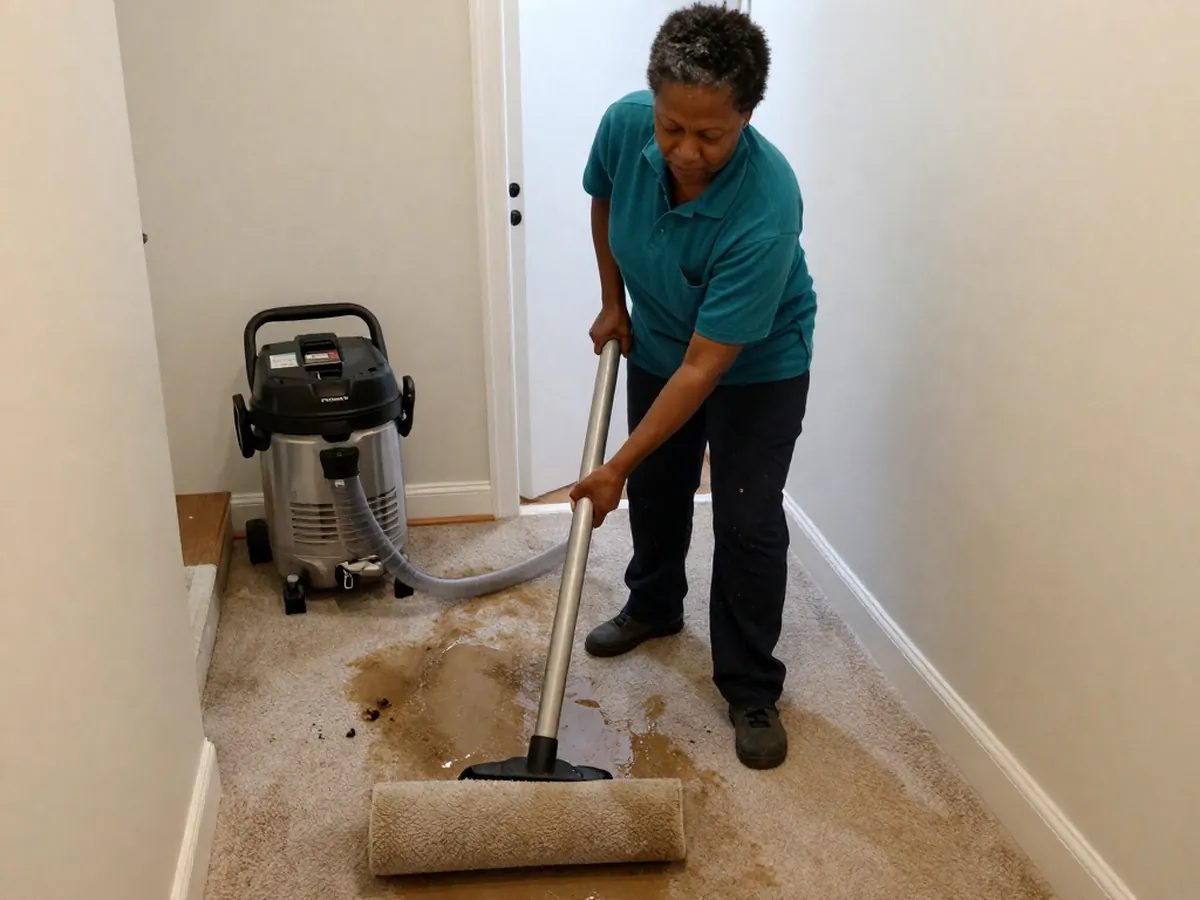
- Carpet is among the porous items the EPA says may be lost once mold sets in, and the CDC puts rugs among things that cannot be disinfected after floodwater.
- Who handles a broken main in the street?
- Austell's Public Works lists 404-387-7898 for water and sewer emergencies, and Cobb Water's dispatch number, 770-419-6201, handles sewer backups and lines that are gushing.
- What about a generator or pump?
- The EPA says to run fuel-powered ones outdoors only, at least 20 feet from buildings.
- When is it 911?
- Sparks, a burning smell, a gas smell, a ceiling coming down, or a downed wire.
Is it safe to walk in?
Look before you step. The CDC advises coming back in daylight, with battery-powered flashlights or lanterns and never candles or torches. On electricity, it leaves no room: standing in water rules out switching power on or off and rules out using electric tools or appliances.
When the house itself looks damaged, the CDC's advice is to stay out until a building inspector has examined it. The Red Cross adds that a sagging floor can give way under your weight and that a jammed door may be holding up part of the structure.
Who switches off what?
Electricity: the CDC puts the main switch off when it can be reached from a dry spot. If reaching it would mean stepping into standing water, an electrician handles it, and an electrician also checks the system before power comes back.
Gas: Austell Gas says to leave when a leak is suspected and never to search for it or try to stop it, then phone 770-948-1841, option 1, or 911 from outside. Water: Cobb Water's advice for a pipe running hard is to shut off the whole house.
What is in the water?
That depends on where it came from, and the CDC's floodwater page treats water that rose from a drain, a toilet or a creek as possibly carrying sewage. Its advice is to stay out of it, wear rubber boots and plastic gloves for cleanup, wash with soap and clean water afterward, and keep children away from it and from toys it touched.
When sewage or other contaminated water caused the damage, the EPA says to hire someone experienced with that kind of job.
What goes in the trash?
Food comes first: the CDC says to discard food that touched floodwater or stormwater, along with food left unrefrigerated during an outage. For the house, wall coverings, cloth, rugs and drywall appear on its list of things that cannot be disinfected and have to go.
The EPA's general rule is to throw out whatever absorbs a lot of water and cannot be thoroughly cleaned and dried. Hard surfaces get scrubbed with soap and water and, after floodwater, disinfected; the CDC gives the mix as 1 cup of bleach to 1 gallon of water.
What the clock allows
Mold needs little time in wet building materials. The EPA's one-day rule: building materials and furnishings that stay wet past 24 hours can grow mold, and its brief guide allows 24 to 48 hours for drying out water-damaged areas and items. A house that took on real flooding usually needs several days to weeks to dry out, the EPA says, and refinishing waits until materials read 15 percent moisture or lower.
Where a flooded house has been closed up for several days, the CDC's instruction is to presume mold. The EPA suggests keeping indoor humidity under 60 percent.
Stuck on a question only your house can answer?
Some questions depend on the wall, the floor and the water, and no page can answer them. The water extraction page and the sewage backup page cover the two most common starting points. Call (678) 737-4866 and describe the room, what the water touched and what you have already done.